Request a quote

photo of a lake, mountains, and forest

Green water & phytoplankton

Understanding the root causes of the "
" phenomenon and restoring a sustainable balance

green water phytoplankton 1 1

What you see

The water takes on a uniform green hue, ranging from pale green to deep green, sometimes with a slight film on the surface.

The transparency decreases sharply: the background becomes invisible, and the water column appears uniformly colored.

The intensity of this coloration often varies throughout the day, with a noticeable increase in the late afternoon due to photosynthesis.

What this means

This situation corresponds to a phytoplankton bloom, that is to say a massive development of microscopic algae suspended in the water column.

It indicates a state of eutrophication in the environment, which is generally caused by a combination of several factors:

  • excess available nitrogen and phosphorus,
  • high light penetration,
  • rise in water temperature.

Under these conditions, photosynthesis accelerates and algal biomass exceeds the water body’s natural self-regulating capacity.

This profile is common in enriched environments and is one of the most frequently observed phenomena in the field.

green water phytoplankton 2 1

Need to confirm the issues with your body of water?

Contact a TASO expert

Why act now?

Sustained green water is not an isolated phenomenon: it is accompanied by internal changes that gradually weaken the aquatic ecosystem.

  • Marked chemical variations, notably significant fluctuations in pH and dissolved oxygen in the water.
  • Decrease in available oxygen in the early morning, linked to the algal cycle.
  • Increased biomass, dead algae feeding a rich layer of silt.
  • Biological imbalance, which can promote the evolution towards more problematic flora (cyanobacteria) and invasive aquatic plants.

Please note that these trends often grow exponentially and become more difficult to correct if corrective and preventive measures are not implemented.

The TASO Solution
biological regulation and physical control

We do not use algaecides, as they generally make the situation worse by releasing toxins and nutrients.

Our approach is based on three complementary pillars:

1

Trophic Competition (Biological Action)

We cut off the algae’s food supply. By introducing concentrated bacterial complexes, we can consume nitrogen and phosphorus much faster than the algae can. Without available nutrients, the phytoplankton naturally declines.

2

Ultrasonic Removal (Physical Action)

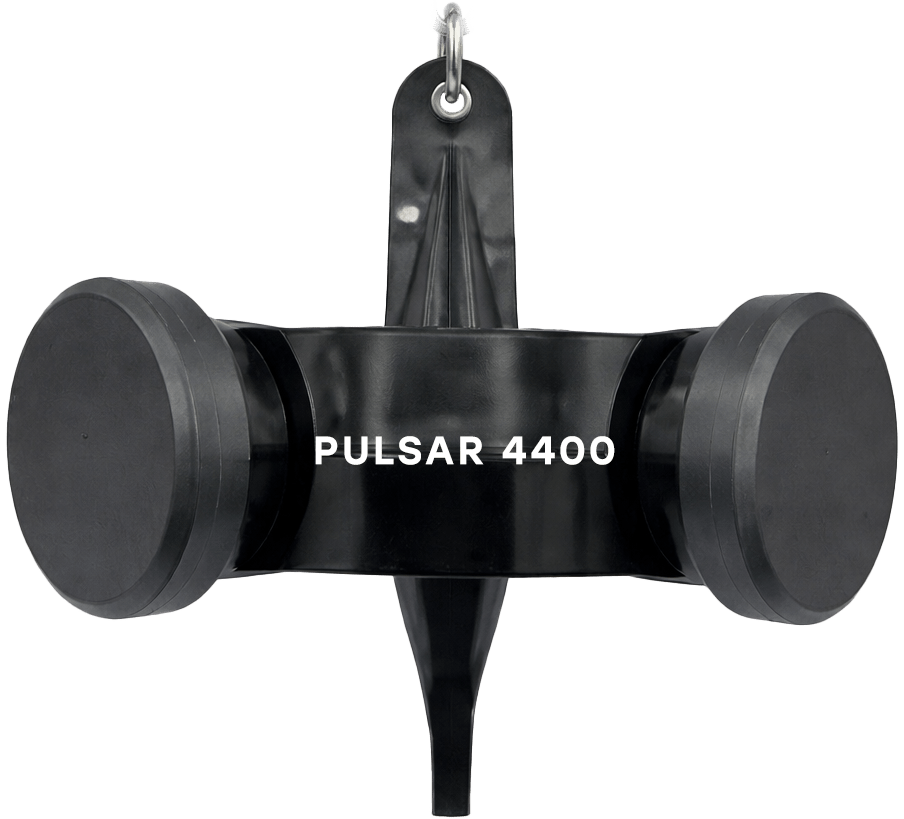
For large volumes, we use ultrasound technology. Speakers emit 4,400 sound frequencies that resonate with the algae’s cellular structure. As a result of the vibration, the algae lose their ability to float, sink to the bottom due to lack of light, and are then broken down by bacteria present at the bottom of the water body.

3

Light Limitation (UV Protection)

We use a selective filter that blocks the UV rays necessary for photosynthesis without harming wildlife. Deprived of sunlight, the algae stop growing.

Products
& Related Solutions

Depending on the characteristics of the water body and the degree of eutrophication, several technologies can be deployed in a complementary manner.

Cyanobox

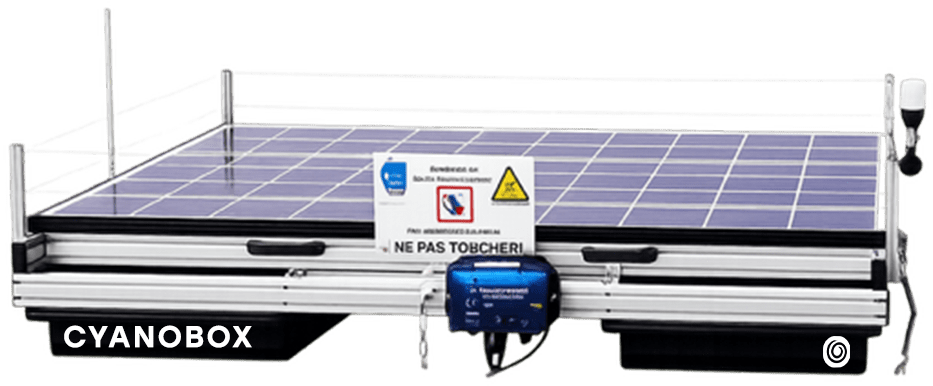
Cyanobox

the large-scale standalone solar power station
Learn more
Pulsar 4400

Ultrasons Pulsar 4400

High-power ultrasound technology.
Learn more
cyanocline

Cyanocline Control

biological control of cyanobacterial blooms
Learn more

Need a study?

Each protocol is tailored to the initial assessment, the characteristics of the body of water, and its intended uses.

Request an assessment