
Request a quote

Be contacted by a TASO counselor

    I would like to be contacted by:

    Send
    photo of a lake, mountains, and forest

    Invasive aquatic plants

    Invasive aquatic plants are now one of the major challenges in water body management. Water primrose, Brazilian water milfoil, waterweed, and lagarosiphon rapidly colonize these environments, to the point of making certain uses impossible.

    For managers, the consequences are immediate: restrictions on navigation, closures of swimming areas, clogging of intake screens, and deterioration of aquatic habitat conditions.

    In the long term, these plants severely disrupt the ecosystem, crowd out native vegetation, and accelerate siltation through the accumulation of biomass.

    Controlling invasive aquatic plants requires a management approach based on an analysis of biological mechanisms and the implementation of solutions tailored to the site’s characteristics.

    Our Products
    Invasive aquatic plants 1

    Understanding
    the imbalance

    Aquatic plants are naturally present and beneficial in a balanced pond. The problem arises when certain species—often exotic ones—find ideal conditions for their expansion: strong light, available nutrients, and little competition.

    These plants have a key biological advantage: a very high capacity for vegetative reproduction. Their propagation through fragmentation allows a single piece of stem to produce a new colony in just a few weeks.

    By forming dense, continuous beds of vegetation, they monopolize light, slow down water circulation, and trap sediment. The ecosystem then shifts toward a closed-system state, which promotes the accumulation of organic matter and accelerates the aging of the water body.

    Why do traditional solutions
    fail?

    • The most common response to weed infestations remains mechanical mowing.
Although this approach is visually effective in the short term, it often proves counterproductive.
    • By cutting plants, we inadvertently create fragments that can take root elsewhere. Each intervention thus contributes to the spread of the species, while generating recurring costs and a reliance on mechanical maintenance.
    • Chemical solutions, on the other hand, are increasingly regulated or even banned. They pose risks to wildlife and water quality and provide only temporary control, without addressing the root causes of the infestation.

    The answer
    taso

    The TASO approach is based on a fundamental principle: depriving the invasive plant of what it needs to grow, rather than simply cutting it down or destroying it.

    Photosynthesis is the driving force behind plant growth. By controlling access to light, it is possible to permanently halt the spread of unwanted plants without disrupting the overall balance of the environment.

    This strategy allows for gradual, targeted control that respects the ecosystem, without spreading the organism or damaging the site.

    Request a quote
    Invasive aquatic plants 2

    Our technologies
    & products used

    Physical barrier against regrowth

    AQUASCREEN benthic barriers are used in high-impact areas such as beaches, piers, channels, and fishing grounds. Installed directly on the seabed, they completely block light from reaching the sediment. Their microporous design allows water and gases to circulate, preserving benthic life while preventing plant regrowth.

    Reduced photosynthesis

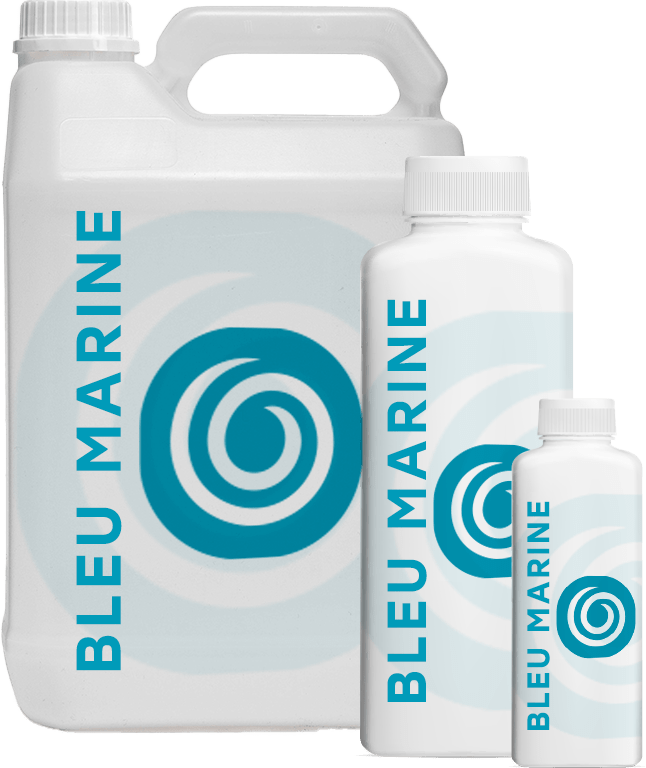
    The BLEU MARINE solution works across the entire water surface. This optical filter limits the penetration of the wavelengths necessary for photosynthesis without clouding the water or affecting its use. It provides a long-term means of controlling the growth of rooted plants while simultaneously enhancing the site’s aesthetic appeal.

    Nutrient stabilization of the seabed

    In addition, NAUTEX can be used to reduce the bioavailability of nutrients in the sediment, thereby reducing the vigor of regrowth and enhancing the stability of the seabed.

    Invasive aquatic plants 3


    Benefits for the manager

    Areas equipped with TASO solutions quickly return to normal operation.
Systems remain secure, with no downtime or major maintenance required.

    In the medium and long term, eliminating repetitive mowing helps control operating costs and ensures that site management is conducted in a sustainable manner. Above all, the absence of fragmentation significantly limits the spread of invasive species downstream, protecting the entire watershed.


    's answer to your questions

    Do benthic barriers destroy life on the seafloor?

    No. Unlike waterproof plastic tarps, AQUASCREEN barriers are breathable. They allow water and gases to pass through, enabling benthic microfauna to thrive, while preventing plant growth.

    Is the Bleu Marine dye safe for swimmers and wildlife?

    Yes. It is a food-grade, biodegradable, and non-toxic dye. It does not affect water quality, wildlife, or recreational activities.

    Is it possible to completely eradicate an invasive plant?

    In most cases, the realistic goal is not total eradication but sustainable control. TASO aims to reduce the plant population to a level that is compatible with human activities and ecological balance, while preventing any large-scale reinfestation.

    Each invasive species
    requires a specific approach

    Incorrect identification or inappropriate intervention can cause lasting harm.

    TASO experts will work with you to accurately identify the plants present and develop an effective, long-term control strategy.

    Request an assessment