

Request a quote

Be contacted by a TASO counselor

    I would like to be contacted by:

    Send
    Illustration of green water

    Artificial snow production

    Artificial snow production 1 1

    What you see

    At the start of the peak season or during cold spells, the filters in your system become clogged very quickly, forcing you to clean them very frequently. These issues directly impact production:

    • Recurring nozzle clogging: The filters on the booms or fans are clogged or not working.
    • Poor snow quality: The snow is “wet” and heavy, with poor structural integrity. It forms a “slush” rather than a compact snowpack.

    What this means

    The problem isn't the snow guns, but the intrinsic quality of the water pumped from the hillside reservoir. TASO has identified two biological threats that are undermining snow production:

    1. Biofilm (The Cause of Clogging)
      Microscopic algae proliferate in the reservoir. They colonize the miles of pipes in the snowmaking system.
      The mechanism: Under pressure, patches of biofilm break off (“sloughing”) and end up in the fine filters of the snow guns. This is a biological obstruction, not a mineral one.
    2. Nucleation Defect (The Cause of Poor Snow Quality)
      To make snow, you need pure water.
      The Mechanism: The presence of Suspended Solids (SS) and dissolved organic matter disrupts crystallization. Contaminated water requires a lower temperature to freeze (freezing point depression).
      The Consequence: With dirty water, you consume more energy to produce less snow at the same temperature.

    Conclusion: Your hilltop reservoir is dynamic and unstable. You are pumping an “organic slurry” that is unsuitable for thermodynamic processing.

    Artificial snow production 2 1

    Need to confirm the issues with your body of water?

    Contact a TASO expert

    Why act now?

    In the ski industry, the "cold window" is the most critical factor:

    • Irreversible loss of production: If the snow cannons are blocked during the 4 hours of intense cold at night, that volume of snow is lost for the season.
    • Significant increase in energy costs: Producing snow with contaminated water requires higher pressure and more compressed air. The kW/m³ ratio for snow skyrockets.
    • Equipment wear: Organic particles act as abrasives on the nozzles (titanium/stainless steel) and high-pressure pumps.

    The TASO Solution
    Clarifying water to optimize crystallization

    We treat the hillside reservoir to ensure it provides "crystal-clear" water.

    1

    Clarification of the retention (Ultrasonic treatment)

    This is the standard technology for high-altitude large-volume applications.

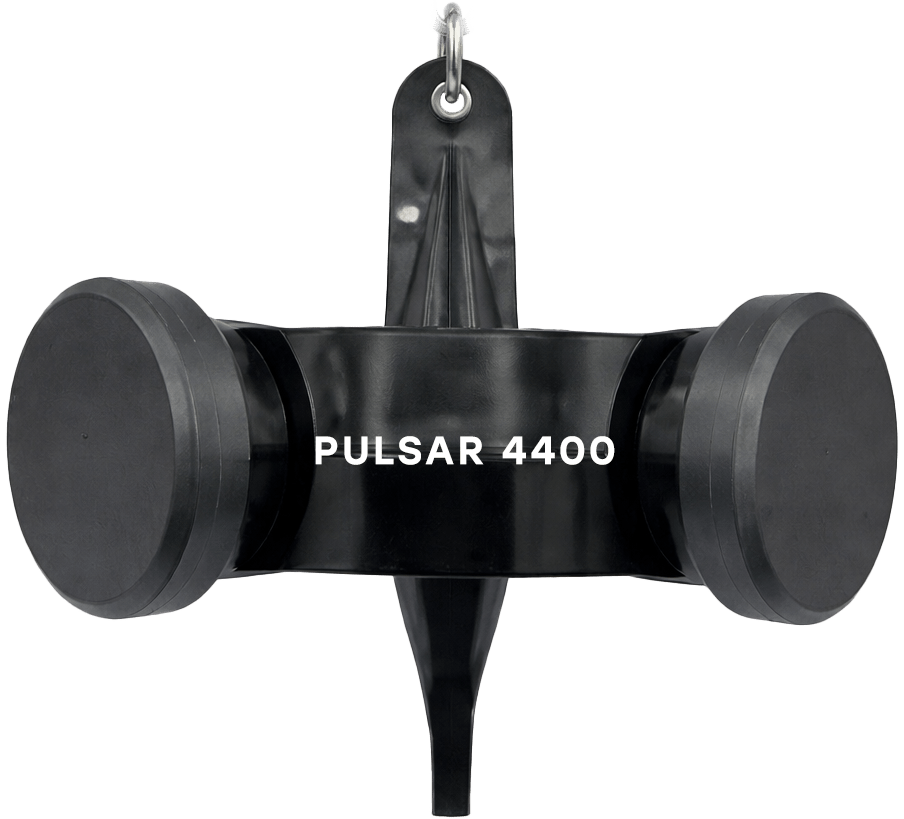
    How it works: Ultrasound (PULSAR 4400 Series) prevents algae growth in the reservoir.

    The result: Without algae, there is no longer any biofilm in the filters. Nozzle clogging is reduced, eliminating the need for emergency maintenance.

    2

    Nucleation Optimization (Physicochemical Process)

    We remove the particles that interfere with the gel.

    How it works: The use of Nautex causes suspended solids to settle to the bottom of the reservoir (flocculation).

    The result: The pumped water is crystal clear. Nucleation (the water-to-ice transition) occurs earlier, as soon as temperatures drop below freezing (optimized wet-bulb temperature). The snow is whiter, drier, and harder.

    3

    Network Security

    Clean water prevents the formation of corrosive gases (H₂S) in empty pipes during the off-season, extending the service life of valves and hydrants.


    Products & Related Solutions

    To ensure adequate snow cover:

    Pulsar 4400

    Ultrasons Pulsar 4400

    High-power ultrasound technology.
    Learn more
    biolimpid

    Biolimpid

    Biological sedimentation
    Learn more

    Need a study?

    Each protocol is tailored to the initial assessment, the characteristics of the body of water, and its intended uses.

    Request an assessment