Request a quote

Be contacted by a TASO counselor

    I would like to be contacted by:

    Send
    Illustration of green water

    Duckweed & water chestnuts

    water lentils water chestnuts 1 1

    What you see

    The surface of the body of water gradually becomes covered with a dense, uniform layer of vegetation. There are two main scenarios:

    • Duckweed (Lemna / Spirodela): A multitude of tiny, free-floating, rootless leaves that form a dense mat that drifts with the wind.
    • Water chestnuts (Trapa natans): Rosettes of serrated leaves floating on the surface, attached to the bottom by a stem, producing hard, spiny black fruits in late summer.

    In both cases, the coverage is complete: the surface is no longer visible, the water is obscured, and vegetation accumulates primarily in calm areas (coves, sheltered banks, areas with no current). This coverage is one of the clearest signs of an environment in a state of advanced imbalance.


    What this means

    The proliferation of duckweed or water chestnuts is no accident. These plants act as bioindicators, signaling a state of severe eutrophication.

    Their proliferation requires the convergence of three factors:

    1. Excess Nutrients: The water is saturated with nitrogen and phosphorus, creating ideal conditions for explosive reproduction.
    2. Hydrodynamic Stagnation: The absence of current and mixing allows the mat to stabilize on the surface.
    3. Active Sediments: Silt continuously releases phosphorus, supporting plant growth either from the bottom (in the case of chestnuts) or through the water column (in the case of duckweed).
    water lentils, water chestnuts 2 1

    Need to confirm the issues with your body of water?

    Contact a TASO expert

    Why act now?

    Beyond its visual impact, this layer of vegetation poses an immediate threat to the health of the body of water:

    • The vegetation cover blocks 100% of the sunlight. Photosynthesis ceases at depth, while respiration continues. Oxygen levels drop dramatically, putting the fish population at risk of death.
    • These plants have a short life cycle. As they die, their biomass sinks to the bottom and forms a thick layer of organic silt, which will serve as the breeding ground for the next invasion. It is a self-sustaining cycle.
    • The fruits of the water chestnut, with their sharp spines, are dangerous to swimmers and animals. In addition, the floating biomass quickly clogs suction screens and irrigation pumps.

    The TASO Solution
    Restore movement and limit nutrient availability

    Mechanical removal is often difficult (due to rapid growth), and chemical treatment is prohibited. TASO favors ecological engineering to alter the environmental conditions.

    1

    Hydrodynamic Action (Setting in Motion)

    This is the primary strategy. We create surface currents using hydro-ejectors or fountains to break up stagnant water. This physical disturbance prevents the algae from forming a continuous mat and pushes the biomass toward the banks, making it easier to control.

    2

    Biological Action (Nutritional Competition)

    We introduce beneficial bacteria selected for their voracious appetite for nitrogen and phosphorus. By consuming available nutrients faster than the plants can, we create a nutrient deficiency that slows down and eventually stops plant reproduction.

    3

    Mineral Stabilization (Bottom Lock)

    The application of technical calcium carbonate helps reduce the release of phosphorus from the sediment and stabilize bottom chemistry. This cuts off the nutrient supply to rooted plants such as water chestnut.


    Products & Related Solutions

    To free up the surface and reoxygenate the water:

    nautex

    Nautex

    the standard mineral treatment for all bodies of water
    Learn more
    oxylake

    Oxylake

    Oxygenation solutions for ponds and bodies of water
    Learn more
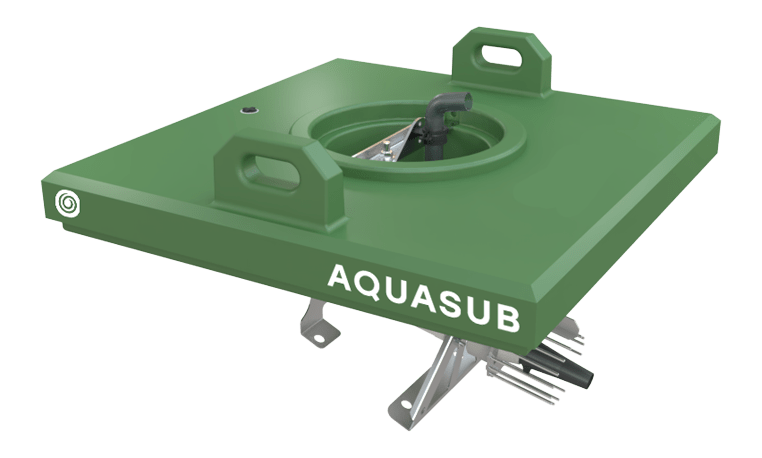
    aquasub

    Aquasub

    The Intensive Mixing Hydro-Ejector
    Learn more

    Need a study?

    Each protocol is tailored to the initial assessment, the characteristics of the body of water, and its intended uses.

    Request an assessment