
Eutrophisation, Algues et Réchauffement Climatique : Explorons les liens et les Impacts écologiques et économiques
Écrit par :
Modifié le :
Temps de lecture :
Plan de l’article
- Comprendre l’eutrophisation et la prolifération des cyanobactéries
- Le réchauffement climatique accélère le développement des algues
- Les conséquences écologiques et économiques des algues toxiques
- Quelles solutions pour limiter l’eutrophisation des plans d’eau ?
- Préserver durablement les écosystèmes aquatiques
- Besoin d’informations, une question ?
Votre plan d’eau à besoin d’une expertise ?
Comprendre l’eutrophisation et la prolifération des cyanobactéries
Nous l’avons vu ces derniers mois et plus particulièrement cet été, les chaleurs intenses et les épisodes de canicules que nous avons observés ont eu pour conséquences d’accélérer le développement des phénomènes d’eutrophisation. Dans un contexte de changements climatiques récents, les écosystèmes aquatiques du monde sont confrontés à des défis croissants. l’eutrophisation, phénomène résultant de l’excès de nutriments tels que l’azote et le phosphore dans les plans d’eau, s’associe de plus en plus aux effets du réchauffement climatique. Les algues et les cyanobactéries, des micro-organismes présents naturellement dans les milieux aquatiques, profitent de ces conditions favorables et prolifèrent à une vitesse alarmante.
Ces organismes se nourrissent des nutriments présents dans l’eau, tels que les phosphates et les nitrates provenant des engrais agricoles, des eaux usées et du ruissellement des sols. l’augmentation de la température de l’eau favorise également le développement des algues et des cyanobactéries. cette prolifération d’algues et de cyanobactéries peut avoir des conséquences néfastes sur la qualité de l’eau et sur la vie aquatique.
Le réchauffement climatique accélère le développement des algues
En effet, ces micro-organismes consomment l’oxygène dissous dans l’eau, entraînant ainsi une diminution de la quantité d’oxygène disponible pour les poissons et les autres organismes aquatiques. De plus, certaines espèces d’algues et de cyanobactéries peuvent produire des toxines, rendant l’eau toxique pour la faune, la flore et même pour les êtres humains.
Eutrophisation et Algues. un équilibre fragile l’eutrophisation, amplifiée par les activités humaines telles que l’agriculture et l’urbanisation, résulte en l’accumulation excessive de nutriments dans les plans d’eau. Les nitrates et phosphates en excès agissent comme des fertilisants, favorisant la croissance prolifique des algues. ces tapis d’algues restreignent la lumière et l’oxygène, étouffant la biodiversité aquatique et déséquilibrant les écosystèmes.
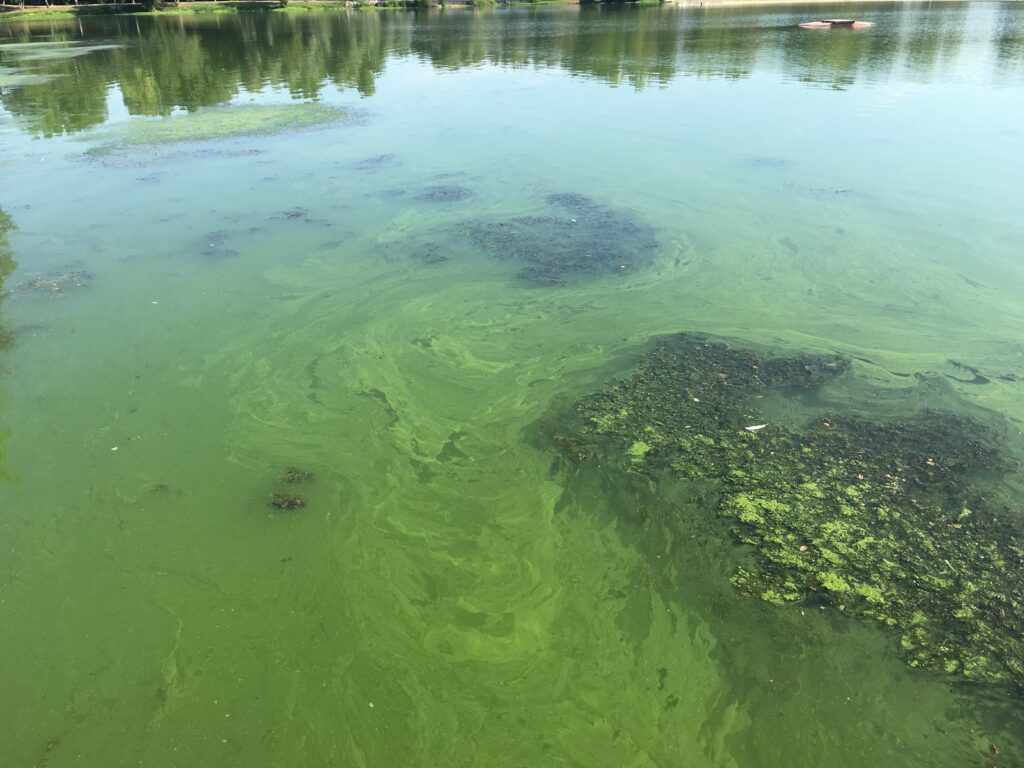
Les facteurs chimiques accélérant l’eutrophisation. l’eutrophisation n’est pas seulement impulsée par les activités humaines, mais aussi par des réactions chimiques complexes dans les plans d’eau. Les sédiments et sols aquatiques interagissent avec les nutriments, libérant davantage de phosphates et de nitrates dans l’eau. Ces processus chimiques renforcent la prolifération des algues, contribuant ainsi à l’eutrophisation.
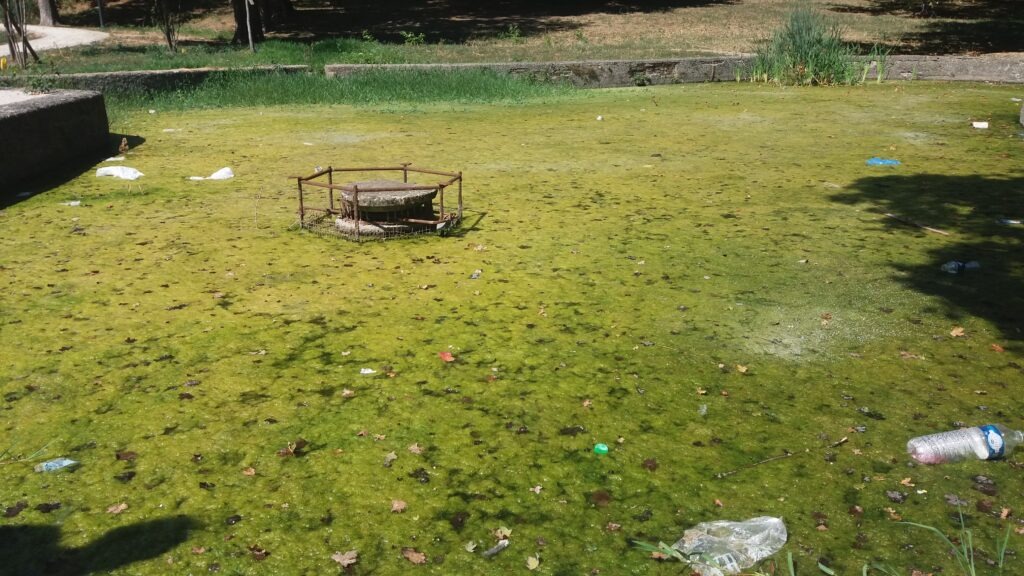
Cyanobactéries et Réchauffement Climatique. Un Double Impact. Les cyanobactéries, souvent appeléesalgues bleu-vert, sont particulièrement affectées par le réchauffement de l’eau. Les températures élevées encouragent leur floraison, entraînant des blooms de cyanobactéries nuisibles pour la santé humaine et animale.
Les conséquences écologiques et économiques des algues toxiques
Le réchauffement climatique aggrave ce phénomène, menaçant la qualité de l’eau et la stabilité des écosystèmes. Le réchauffement climatique agit comme un catalyseur pour l’eutrophisation et la prolifération des algues. Les eaux plus chaudes prolongent les périodes de croissance des algues, amplifiant leur impact sur les plans d’eau. Les événements météorologiques extrêmes, tels que les pluies abondantes, intensifient le lessivage des nutriments dans les cours d’eau, aggravant l’eutrophisation.
Les plans d’eau de baignades ont été largement touchés par ce phénomène de développement d’algues et de cyanobactéries. les fermetures de baignades se sont enchainés et les collectivités sont contraintes de mettre au chômage les maîtres nageurs. Au delà de l’impact écologique, c’est l’impact économique de l’interdiction de la baignade qui est très problématique pour les mairies et les collectivités comme les communautés de communes et les conseils départementaux.
En effet, la fermeture d’une baignade a un effet particulièrement négatif sur l’activité économique résultant de l’attractivité touristique d’un plan d’eau. Plus de baignade et les commerçants voient leur chiffre d’affaire dégringoler. Les restaurants, les hôtels, les campings municipaux ou les campings privés voient leur fréquentation diminuer et en dernier ressort, c’est la municipalité qui ne perçoit pas de taxes de séjour ni de revenus fiscaux.
Quelles solutions pour limiter l’eutrophisation des plans d’eau ?
Face à ces défis, des solutions sont nécessaires pour préserver nos écosystèmes aquatiques. La réduction des rejets de nutriments provenant des activités humaines est essentielle.
Pour traiter les cyanobactéries et limiter leur prolifération, il existe plusieurs solutions. Tout d’abord, il est essentiel de réduire les apports en nutriments dans les plans d’eau. Cela passe par une gestion plus responsable des eaux usées, en les traitant correctement avant de les rejeter dans les cours d’eau.
Il est également important de limiter l’utilisation des engrais agricoles contenant des phosphates et des nitrates, qui se retrouvent ensuite dans les milieux aquatiques. Des pratiques agricoles durables, la restauration des zones humides et l’adoption de technologies innovantes, comme les systèmes de filtration naturels, peuvent contribuer à réduire l’eutrophisation.
La filtration de l’eau est une autre solution efficace pour éliminer les micro-organismes indésirables tels que les algues et les cyanobactéries. Une filtration adéquate permet de retenir les particules en suspension, y compris les micro-algues, et d’améliorer ainsi la qualité de l’eau.
Dans certains cas, il peut également être nécessaire de traiter l’eau avec des produits spécifiques pour éliminer les toxines produites par les cyanobactéries. La sensibilisation du public joue un rôle crucial. En éduquant les communautés sur les sources de nutriments et les conséquences de l’eutrophisation, nous pouvons encourager des pratiques respectueuses de l’environnement.
Préserver durablement les écosystèmes aquatiques
La recherche continue et la surveillance régulière des plans d’eau sont également essentielles pour adapter nos stratégies de gestion. l’eutrophisation, le développement des algues et des cyanobactéries, et le réchauffement de l’eau sont des enjeux interconnectés qui nécessitent une action collective.
l’eutrophisation est un phénomène environnemental préoccupant qui affecte les milieux aquatiques à l’échelle mondiale. Ils ont une tendance naturelle à devenir eutrophes, mais l’apparition d’algues toxiques est due à une surfertilisation de l’eau, principalement par les apports d’azote et de phosphore, provenant notamment des engrais phosphatés d’origine agricole.
Ce phénomène résulte en une augmentation des taux de nitrates, favorisant la croissance des micro-algues, y compris les cyanobactéries toxiques. Ces dernières peuvent former des fleurs d’eau, contribuant ainsi à la prolifération d’algues nuisibles dans les milieux aquatiques.
En fin de compte, la compréhension des mécanismes liés à l’eutrophisation, incluant les taux de nitrate, les cyanobactéries toxiques, la baisse du taux d’oxygène dissous, et les effets sur l’environnement, est essentielle pour la préservation de nos milieux aquatiques et la gestion des nutriments dans les eaux continentales.
Partager cet article

Sur le même thème
Besoin d’informations, une question ?
Notre équipe dédiée vous répondra dans les plus brefs délais.